23 Aug 2026 · 91Leads CRM
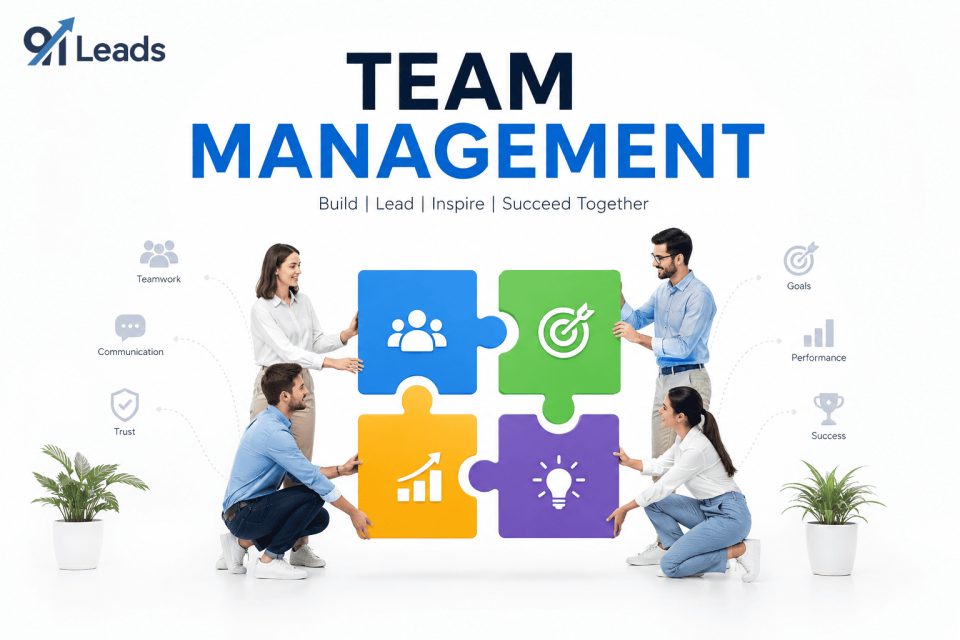
Team Management: How to manage and build High-Performing Teams
Learn how effective team management can improve productivity, collaboration, accountability, and employee performance. Discover practical strategies and skills to build high-performing teams.
Business is successful because of one critical asset called its resource, its people working as teams.
It doesn’t matter what’s your business, whether you're running a startup, managing a sales department, or scaling an enterprise, effective team management is the foundation of sustainable growth.
A motivated, collaborative and productive team works with the help of great products and innovative ideas, make the business successful. Without this they can go so far but will to able to sustain the success. In today's fast-changing workplace where AI has started overtaking the places of employees, owners / managers need to understand the importance of their resource’s insecurity. For this they require more than technical expertise - they need and must have leadership, good communication, emotional intelligence, and the ability to inspire performance.
In this blog, we are going to explain and you are going to learn –
-
what team management is?
-
why it matters?
-
Essential skills manager should develop,
-
common challenges,
-
proven strategies, and
-
the tools for teams to achieve exceptional results.
What is Team Management?
Team management is the process of managing, organizing, motivating and coordinating a group of individuals to achieve common business objectives.
It includes:
-
Setting clear goals for team
-
Assigning responsibilities
-
Managing workloads
-
Tracking performance
-
Resolving conflicts
-
Building collaboration
-
Encouraging professional growth
-
Creating accountability
You might be thinking that team management means managing tasks and teams.
Answer is NO.
The objective of team management
-
is not only managing tasks
-
it is to assist team members to perform best while working together efficiently.
Why Team Management Matters
|
Strong team management |
Poor team management |
|
|
Characteristics of an Effective Team Manager
“Great managers create great teams.”
Successful managers have common qualities such as
|
Qualities |
Description |
|
Strong Communication |
Active listening, Active speaking, giving proper feedback, expressing clear expectations, etc |
|
Leadership |
Use examples to Lead, build trust among team, Support employees, encourage innovation, Make confident decisions |
|
Emotional Intelligence |
Resolve conflicts calmly, build relationships among teams, Improve employee participation |
|
Time Management |
Proper plan to meet deadlines, prioritize important work, reduce stress, Improve productivity |
|
Problem-Solving Skills |
Identify and resolve issues quickly and make informed decisions without delaying progress. |
Essential Team Management Skills
Every manager should continuously work to improve follwoing skills:
-
Communication
-
Delegation
-
Conflict resolution
-
Decision-making
-
Strategic planning
-
Performance evaluation
-
Coaching
-
Motivation
-
Adaptability
-
Project management
How to Build a High-Performing Team
-
Hire the Right People
-
Define Clear Goals
-
Encourage Collaboration
-
Build Trust
-
Give Regular Feedback
Recognize Employee Achievements
Recognition increases motivation. Businesses should celebrate
-
Sales milestones
-
Project completion
-
Innovation
-
Customer appreciation
-
Team achievements
Recognition doesn't always require financial rewards. Sometimes public appreciation has a lasting impact.
Common Team Management Challenges
|
Challenges |
Way out |
|
Poor Communication |
|
|
Low Employee Motivation |
|
|
Conflict Between Team Members |
|
|
Remote Team Management |
|
|
Employee Burnout |
|
Best Team Management Strategies
-
Set Clear Expectations
-
Delegate Effectively
-
Promote Continuous Learning
-
Encourage Innovation
-
Measure Performance
Technology and Team Management
Now a days, modern businesses has started relying on digital tools to improve collaboration because right technology reduces manual work and improves visibility across teams.
Some tools are
-
Project management software
-
CRM platforms
-
Communication tools
-
Video conferencing
-
Performance tracking systems
-
Document collaboration platforms
Team Management Tips for Sales Teams
Sales teams require consistent coaching and accountability for better performance.
Effective sales managers should:
-
Track KPIs regularly
-
Conduct coaching sessions
-
Review pipelines
-
Celebrate wins
-
Use CRM systems efficiently
-
Provide continuous training
-
Encourage collaboration instead of unhealthy competition
Organizations that use lead management and CRM solutions are
-
improving response times
-
streamline follow-ups
-
increase conversion rates
The Future of Team Management
As the workplace keeps on evolving, managers must focus on people as much as processes. They should adopt
-
Hybrid work environments
-
AI-powered productivity tools
-
Data-driven decision-making
-
Flexible work cultures
-
Continuous employee development
-
Skills-based hiring
Conclusion:
Team management does not means only assigning and monitoring timely tasks properly given to team members. It is more than assigning tasks and monitoring performance. It's create a healthy and friendly environment where every team members feel safe, valued, empowered, and motivated to achieve shared goals.
If business looking to improve their sales performance, increase customer relationships, and streamline team collaboration, then implementing the right business processes and technology can make a significant difference.
If you are looking for team management for smarter ways to manage teams, their work and improve sales productivity? Visit 91Leads.com to explore solutions that help businesses grow faster through efficient lead management and sales automation.